

22 — Designing Survival: Reflections on Two Decades as a CEO
After 23 years running a design agency, I’ve seen it all — from early freedom to global growth, from craft to systems. This is my story, the lessons, and the truths about building something that lasts

Issue 22 — Madrid, 9th October 2025
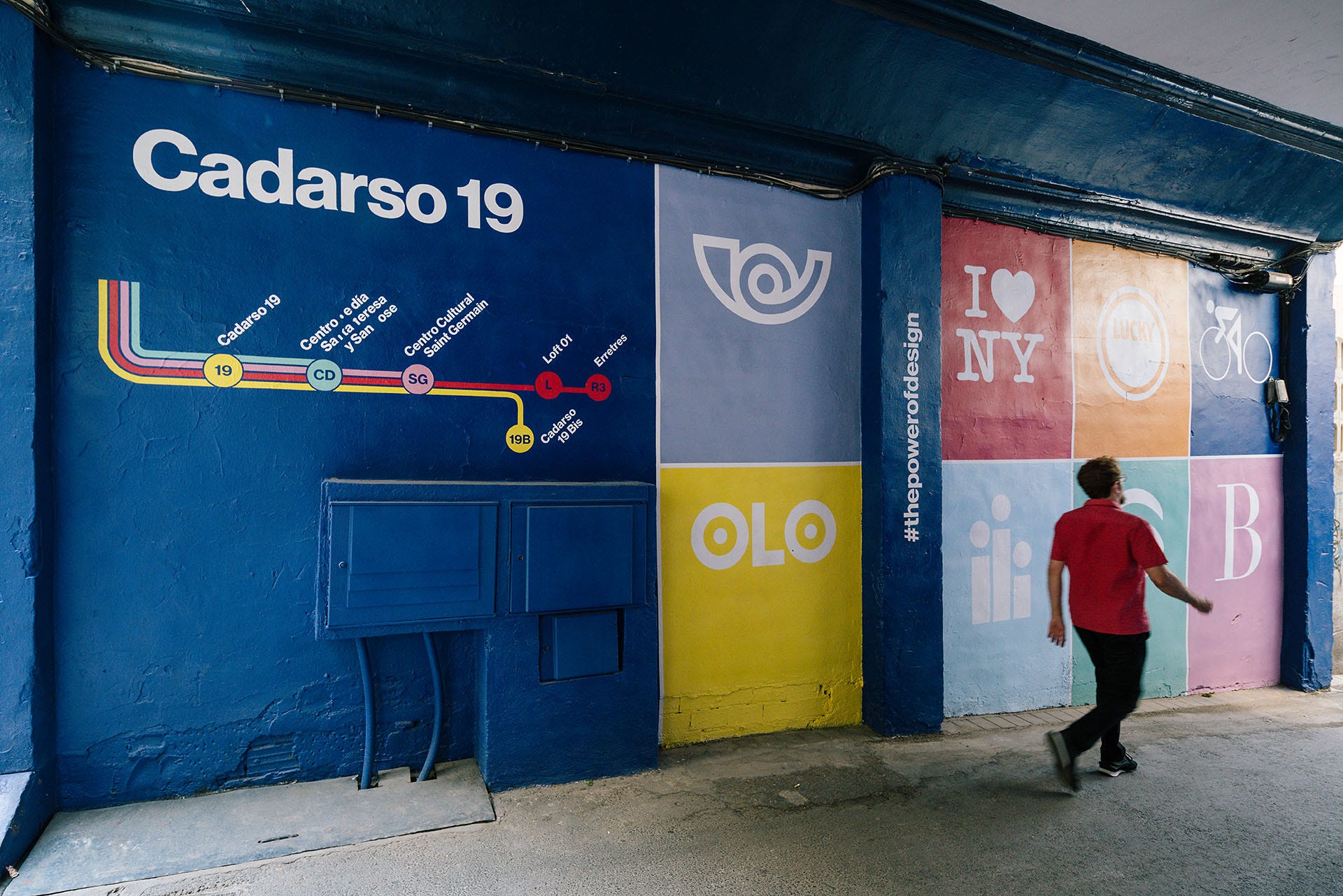
When I started Erretres back in 2003, design felt like freedom.
A few clients, a rented space, a couple of Macs, and the certainty that good work would open doors.
We didn’t talk about design systems, UX frameworks, brand positioning, or AI. We talked about print, typography, Müller-Brockmann, and pushing aesthetics forward.
The world was slower, and so were we.
My first clients: art galleries, museums, publishers, record companies, restaurants…
Our iPod was also our hard drive.
I miss that feeling more than I’d like to admit.
Erretres. Ten Anniversary video by El Torreón de Sol, 2013.
WHAT I WANTED
From day one, I wasn’t interested in being the “creative guy.” I wanted to build something bigger, a company where design had power.
Where design wasn’t decoration, but strategy and impact.
Where decisions were made through design.
I didn’t want to just make logos. I wanted to shape businesses, products, and brands that could last.
Now, that means a bigger structure, and a bigger responsibility.
THE INVISIBLE PRESSURE OF FOUNDERS
I talk to dozens of agency founders every year, and the story repeats: pressure, exhaustion, uncertainty.
Running a design company looks cool from the outside: awards, recognition, nice offices, but inside it’s chaos and fear.
It’s cash flow, people, egos, clients, expectations, and your own creative energy trying to survive under it all.
Like new marriages, many give up before the fifth year. It’s a brutal threshold.
Others choose to bring in a partner, only to later repeat the same joke — which often proves true: “One partner, one problem. Two partners, two problems. Three partners, three problems.”
Partnerships amplify everything: the vision, but also the pain.
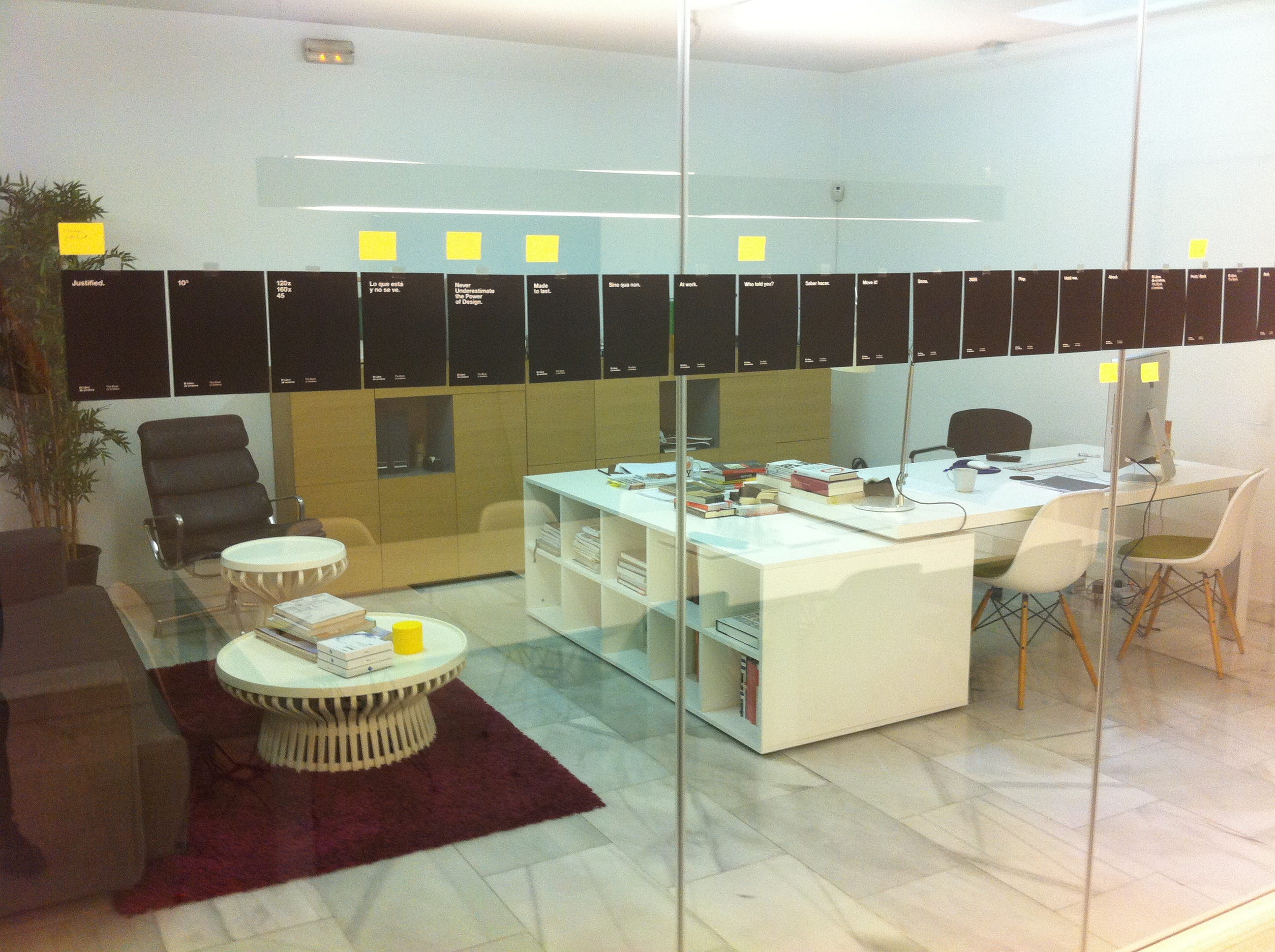
Title ideas for a book about Erretres that never came to life, displayed at the Moreno Nieto office, 2010.
OWNING VS. WORKING
There comes a moment when you stop being a designer who owns a studio and start being an owner — much like other business owners who aren’t necessarily designers.
At that point, you stop designing for your clients and start designing the studio itself.
It’s a completely different life.
Being in an agency or being self-employed and having a small team is doing projects for others.
Being an owner is building a business that can run without you, orchestrating people, systems, and clients toward a shared vision.
It’s letting go of control, of ego, of the need to touch every pixel — and focusing instead on building something that lasts beyond your hands.
That shift is painful, but it’s the only way to evolve.
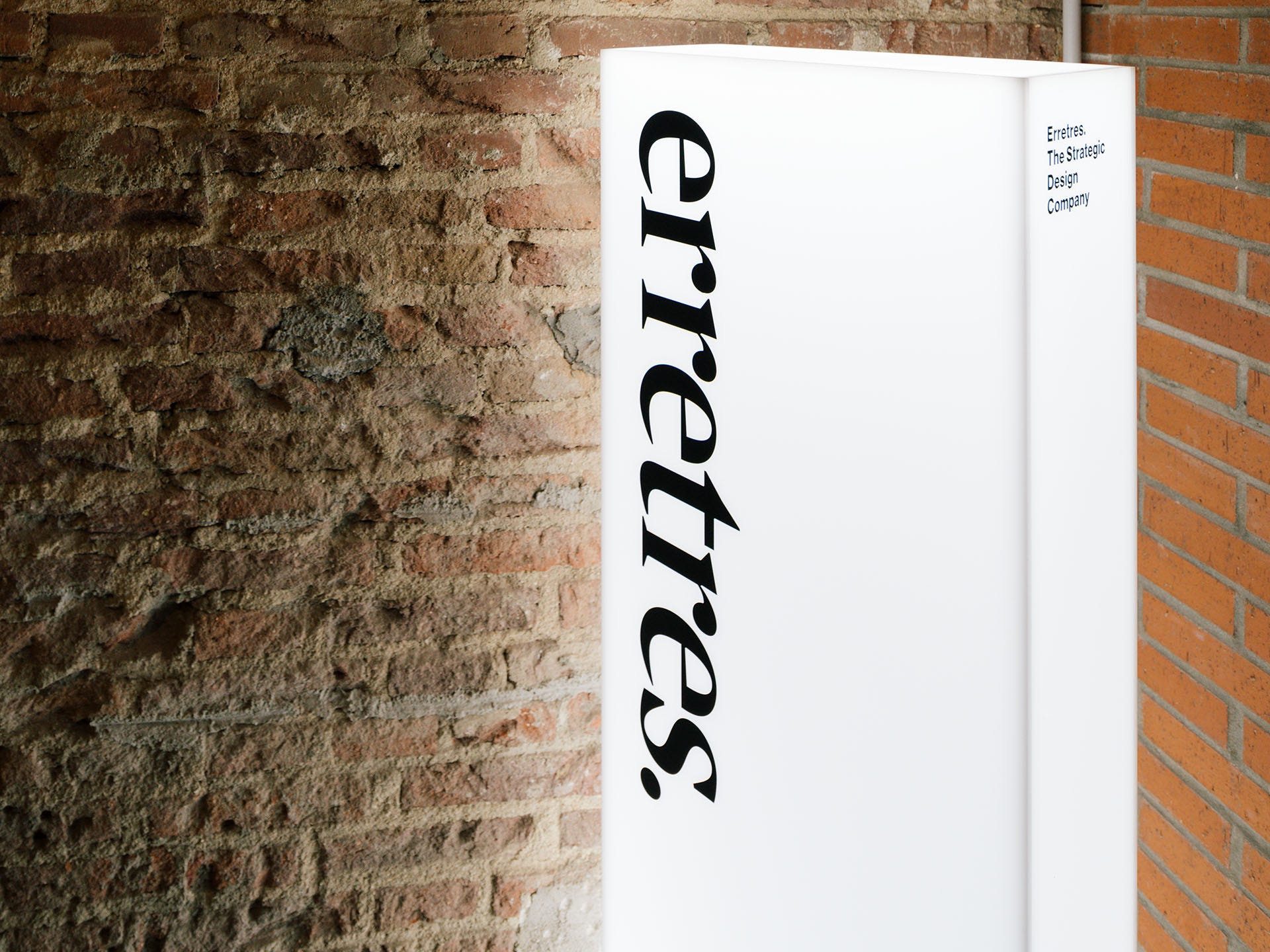
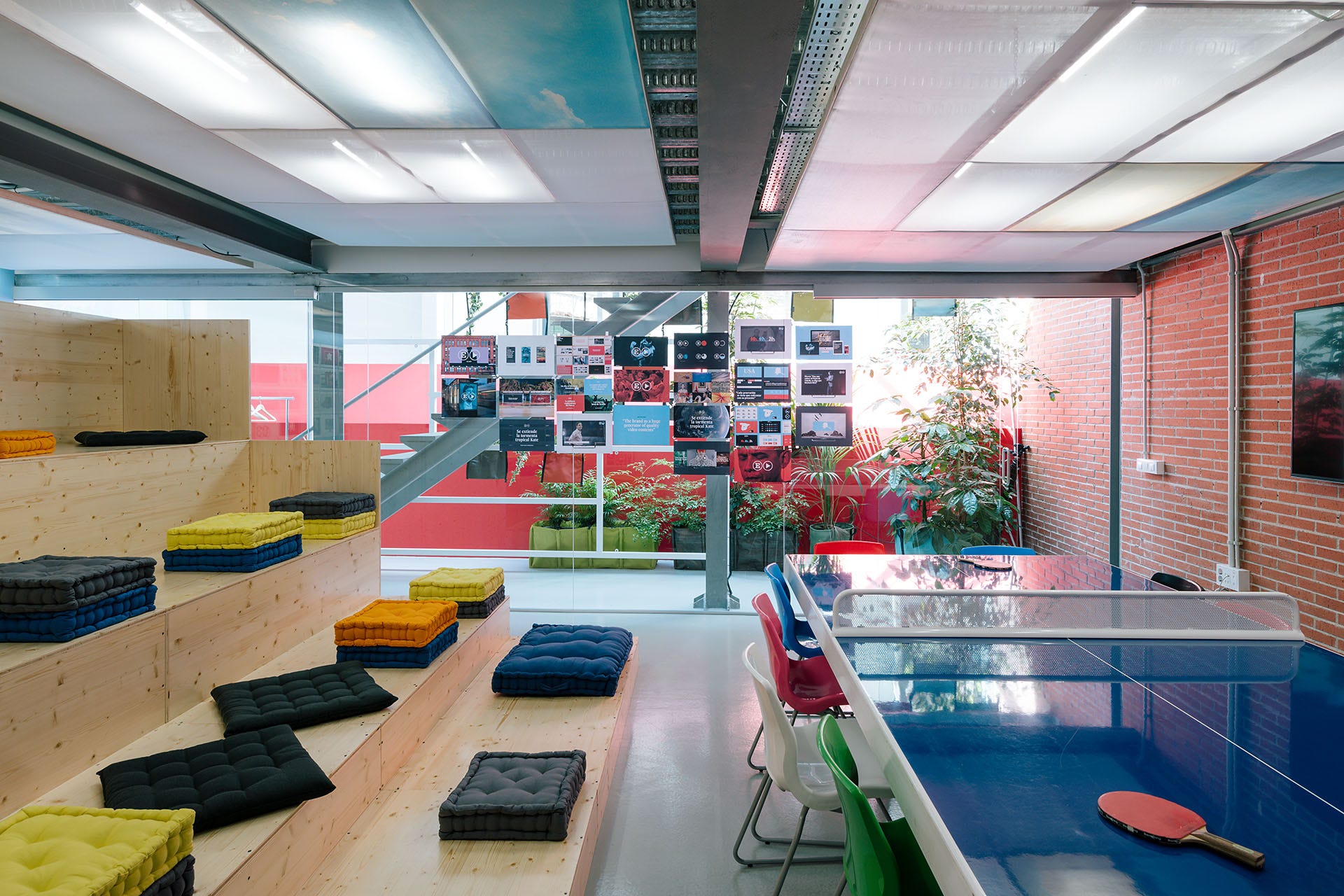
Erretres — presentation room at calle Cadarso, Madrid (2019). Photo: Miguel de Guzmán.
TWENTY YEARS LATER
Now, some of those founders who left the game tell me they admire what I’ve built — not just the awards or portfolio, but for surviving and thriving at the top for over twenty years.
And yes, some wonder how I’ve managed to orchestrate everything from another country, keeping vision, rhythm, and quality perfectly aligned while leading remotely.
Over these years, Erretres has become a living ecosystem.
Just look at the numbers:
Rounding it up… 23 years, 276 months, 8,395 days — every single one spent thinking about the company, even on holidays or when sick.
More than 200 talented professionals have worked here — dedicated people from four continents, each leaving their mark on what Erretres has become. Every project, every idea, every late night has been shaped by their energy and passion.
On average, people stay with the company only two years, and some members of my core team have been with me for over a decade — multiplied by four times the industry average.
It’s surprising to see that while many former Erretresians lead other companies brilliantly, few have gone, just two, on to start another agency. Why?
We’ve invoiced over 30 million euros in billable hours (not production), helping generate more than 7 billion euros for just five startups. And yes — in the early days, we invoiced less than 100,000 euros a year, barely managing to pay our own salaries.
We’ve worked across the globe — from Spain, Japan, and France to the UK, Ecuador, the USA, China, Dubai, Brazil, Australia, and Argentina.
Today, we collaborate with leading clients such as BBVA, Repsol, Santander, Seguros Santa Lucía, Ocaso, Seedtag, and Grenergy, as well as vibrant startups around the world.
In 2017, we launched Erretres Open Lab — an innovation platform created to connect professionals and give design the place it deserves.
Over the past decade, I’ve taught more than 500 design students in places like IE School of Communication, IED Madrid, and Universidad Europea, directing three different programs and co-founding two of them.
Today, we’ve built an active community of over 100,000 followers across social media — from Behance to LinkedIn.
We evolved from a design studio focused on culture and music, to a branding consultancy, and then to a top branding and digital agency.
Our first twenty years, captured here: 20 years, 20 breakups.
It wasn’t luck — it was strategy.
And it’s brutally hard.
But… What’s next?
THE INDUSTRY HAS CHANGED
Design used to be about objects, now it’s about systems.
Used to be about form, now it’s about experience.
Used to be about identity, now it’s about culture.
Today, you don’t compete with agencies, you compete with consultancies, startups, AI tools, and time itself.
Clients expect you to master strategy, UX, motion, brand, data, and technology.
If you don’t evolve, you disappear.
Norman Foster once said, “As an architect, you design for the present, with an awareness of the past, for a future which is essentially unknown.”
That’s what being a design CEO feels like — building the plane while you’re flying it.
Paul Rand taught us that clarity is power.
And every time I look back at my own journey, I remind myself that I’m not writing from comfort, I’m writing from friction.
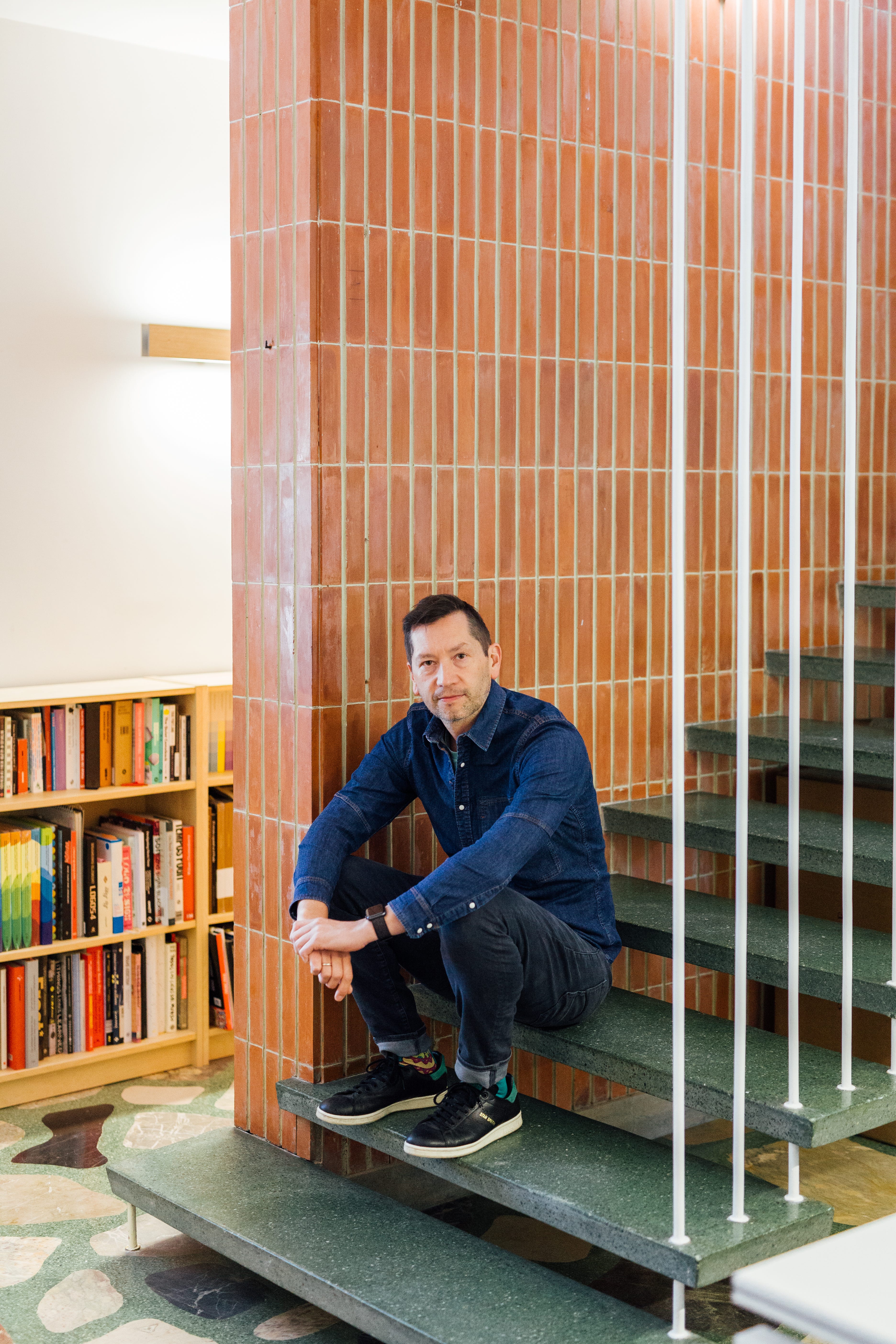
Erretres’ La Florida office in Madrid, just months before the COVID pandemic, 2019. Photo: Guillermo de la Torre for New York Times magazine.
LESSONS LEARNED
( 1 ) In this business, you’re only worth as much as your last project.
( 2 ) Reputation is fragile. It doesn’t feed you forever.
( 3 ) Culture is strategy. If your team doesn’t believe, nothing works.
( 4 ) Design is political. The bigger the client, the harder the internal battles.
( 5 ) You can’t scale chaos. Systems, processes, and leadership matter more than raw talent.
( 6 ) You don’t survive 20 years by doing the same thing. You survive by unlearning.
WHAT’S NEXT
I was talking with a colleague last week and was surprised to realize that I already have a plan for the next five years. I call it my anti-retirement plan — a roadmap that keeps me curious, challenged, and fully engaged, even after more than two decades in the business. It’s not about slowing down; it’s about building, experimenting, and staying alive through design every single day.
Because, design leadership today isn’t about having the right answers, it’s about building organizations that can adapt.
It’s about staying uncomfortable, staying awake.
It’s about helping others grow —clients, teams, even competitors— because that’s how the industry moves forward.
Because in the end, that’s what it takes to build something that lasts more than 20 years:
a mix of stubbornness, love, and the courage to start over every single day.
And maybe that’s the point…
Design isn’t just what we do. It’s what keeps us alive.
My projects:
www.erretres.com
www.design4growth.net
www.erretresopenlab.com
www.nordic-bikes.com
www.wayfndrs.com
Every Thursday at 1 PM CET time, directly to your inbox.